Views: 0 Author: Site Editor Publish Time: 2026-06-21 Origin: Site

In food processing and cold chain logistics, refrigeration failure is never just an equipment issue. It acts as a direct threat to inventory viability, facility compliance, and your gross margins. Standard commercial enclosures routinely fail in extreme low-temperature and high-humidity environments. Internal condensation, component freezing, and chemical washdown ingress compromise basic units rapidly. You simply cannot afford unpredictable downtime when handling sensitive perishables under strict sanitary regulations.
This guide equips procurement teams and facility engineers with an objective, specification-driven framework. We will help you evaluate and source high-reliability control solutions capable of handling harsh operational demands. You will learn how to navigate ingress protection ratings, select robust thermal management systems, and avoid proprietary hardware traps. Read on to discover the specific engineering benchmarks you need to keep your critical cooling infrastructure running flawlessly.
Electrical enclosures placed near or outside refrigeration zones face constant thermal stress. Significant temperature differentials exist between the cold room interior and the external ambient air. These variations create localized dew points inside standard metal boxes. As warm, moist air meets a cold enclosure wall, water vapor condenses into liquid droplets. Moisture then drips directly onto sensitive circuit boards, contactors, and terminal blocks. This internal raining effect causes electrical short circuits, phantom alarms, and accelerated component corrosion. Purpose-built systems counter this threat through strategic venting, proper sealing, and active internal heating.
Food processing environments, particularly meat, dairy, and seafood facilities, mandate rigorous daily sanitation. Crews deploy high-pressure hot water mixed with highly caustic foaming agents to eliminate bacterial loads. Standard powder-coated steel enclosures cannot survive this chemical onslaught. Basic polycarbonate boxes also degrade, becoming brittle when exposed to industrial sanitizers. The corrosive impact quickly compromises door seals and hinges. Once a seal fails, water enters the panel directly. This washdown vulnerability leads to immediate electrical failure and potential safety hazards for operators working on wet floors.
Modern food safety frameworks leave no room for undocumented temperature variances. HACCP protocols and the Food Safety Modernization Act (FSMA) demand continuous, unbroken environmental records. Standard panels lacking integrated telemetry expose your business to severe financial risks. If an auditor discovers unrecorded temperature fluctuations during 3PL transit handoffs or facility inspections, they can reject entire product shipments. Relying on manual temperature checks introduces human error and creates massive liability. Automated, tamper-proof logging acts as your primary defense against costly regulatory penalties and forced inventory disposal.
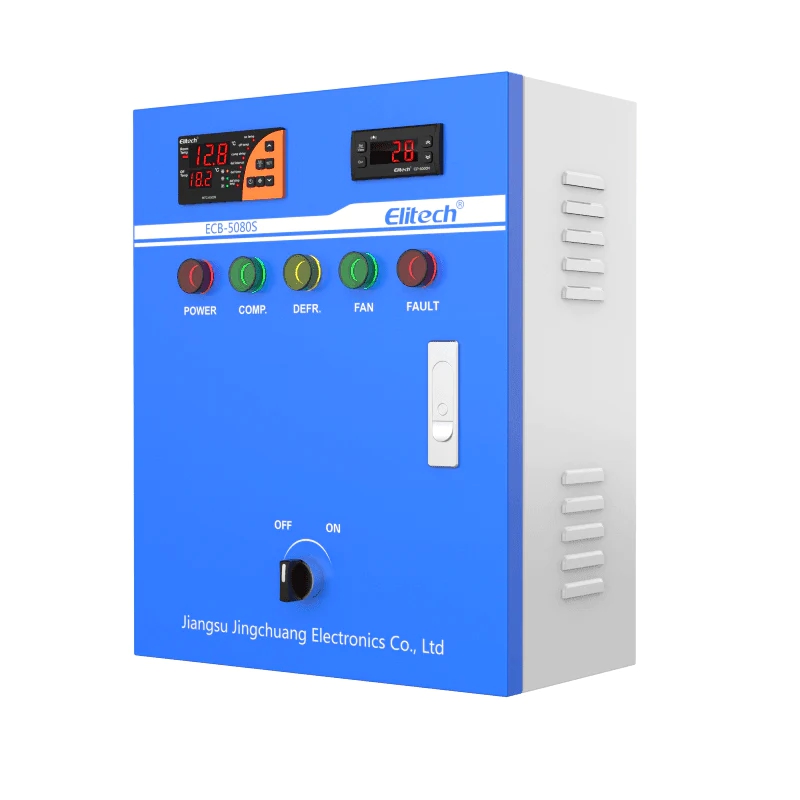
Procuring a reliable Cold Room Electric Control Panel Box requires rigorous attention to physical tolerances. You must match the enclosure design precisely to its surrounding environment.
Different zones within a facility demand distinct structural defenses. Over-specifying drives up budgets unnecessarily, while under-specifying guarantees early failure.
Use the following chart to match enclosure ratings to your specific facility zones:
| Operating Environment | Recommended IP Rating | Ideal Enclosure Material | Primary Threat |
|---|---|---|---|
| High-Pressure Washdown (Meat/Dairy) | IP69K | 316L Stainless Steel | Chemical sanitizers, extreme hot water |
| Standard Wet Processing | IP66 | 304 Stainless Steel | Low-pressure splashing, mild cleaners |
| Dry Storage / Corridors | IP65 | Powder-Coated Steel / Fiberglass | Dust ingress, minor condensation |
| Deep Freeze Interior | IP65 | Industrial Fiberglass | Extreme sub-zero temperatures |
You cannot ignore internal climate control when designing outdoor or cold-zone panels. Evaluating the placement and wattage of internal space heaters remains critical. Positive Temperature Coefficient (PTC) heaters utilize integrated thermostats to maintain internal components safely above the local dew point. Proper placement matters. Heaters must sit at the bottom of the enclosure to allow warm air to rise naturally across the components. Avoiding condensation prevents electrical arcing during complex defrost cycles.
Off-the-shelf commercial electrical parts fail when temperatures plunge below freezing. You must specify deep-freeze rated components. Contactors, mechanical relays, and motor protection circuit breakers (MPCBs) require specific certifications for sub-zero ambient startup. Standard plastics become brittle and crack under mechanical stress at -20°C. Cold-rated components utilize specialized lubricants and flexible polymers to ensure reliable switching actions regardless of the external chill.
Many facilities operate perfectly well using dedicated parameter controllers. Brands like Danfoss and Dixell manufacture specialized microprocessors built explicitly for refrigeration. These analog-style controllers offer tremendous reliability for single-room, straightforward applications.
Pros: They are cost-effective, easy for standard technicians to program, and highly reliable.
Cons: They lack flexibility. You cannot easily modify their internal logic to handle non-standard equipment combinations or multi-zone staging.
When system complexity increases, you should invest in Programmable Logic Controllers (PLCs). PLCs handle vast arrays of inputs and outputs simultaneously. Consider upgrading to a PLC under these specific conditions:
Modern cold chain operations require real-time visibility. Assess built-in capabilities for remote alarming via SMS or email. If a compressor trips at 2:00 AM, the system must notify your maintenance team instantly. Furthermore, evaluate API integrations. Connecting your control panel directly to a Warehouse Management System (WMS) allows operators to track product temperature histories alongside inventory locations. Automated compliance reporting pulls this telemetry data to generate instant, audit-ready HACCP documents, saving hundreds of administrative hours annually.
Many buyers mistakenly purchase highly customized OEM panels to save upfront engineering costs. This decision creates a dangerous proprietary trap. If a specialized, custom-printed circuit board burns out on a holiday weekend, you cannot simply buy a replacement locally. You must wait weeks for the manufacturer to ship a specific part. During this delay, your perishables spoil.
Savvy procurement teams specify open-architecture components. Demand standard DIN-rail mounted parts from universally stocked brands like Schneider Electric, Siemens, or ABB. When an open-market contactor fails, a local electrician can source an exact replacement the very same day. Component standardization ensures you maintain control over your maintenance timeline.
Refrigeration consumes massive amounts of electricity. Your control logic directly impacts this overhead. Evaluate intelligent defrost algorithms closely. Legacy systems rely on timed-defrost schedules, initiating heating cycles every six hours regardless of actual ice accumulation. This wastes energy and introduces unnecessary heat into the cold room.
Demand-defrost logic changes this dynamic entirely. Intelligent panels use sensor data to measure coil efficiency or monitor suction pressure. They only trigger defrost cycles when actual ice restricts airflow. Implementing demand-defrost significantly reduces unnecessary heating cycles, pulling down overall electrical consumption while stabilizing room temperatures.
Replacing an existing panel disrupts facility operations. You must manage installation downtime constraints aggressively. Field-wiring a complex enclosure from scratch on the factory floor invites costly delays and human error.
Best Practice: Always require pre-wired, pre-programmed, and factory-tested panels. Demand a Factory Acceptance Testing (FAT) certificate before the unit ships. A rigorous FAT process simulates all inputs and outputs at the manufacturing level. This ensures the panel operates perfectly before it ever reaches your dock, reducing onsite operational disruption from days down to a few hours.
Do not treat a control panel as a simple commodity. Evaluate the engineering depth of your potential vendor. A weak supplier only offers off-the-shelf catalog units. A highly capable vendor provides comprehensive, site-specific engineering. They will request your compressor specifications and offer custom schematics. Furthermore, they perform strict load-balancing calculations to ensure breakers and wires handle peak startup currents safely. Ask for sample schematics to verify their technical documentation standards.
Never accept uncertified assemblies in industrial environments. Verify UL 508A listings (or regional equivalents like CE and CSA). A common mistake involves assuming a panel is certified simply because the individual breakers carry UL marks. UL 508A certification applies to the entire assembled panel. It guarantees the wiring methods, spacing, and short-circuit current ratings meet strict safety codes. Installing uncertified panels can void facility insurance policies and trigger massive fines from local safety inspectors.
Hardware represents only half the procurement equation. You must assess the vendor's long-term support infrastructure. Scrutinize their warranty terms carefully. Do they cover parts and labor, or just parts? Cold rooms operate continuously, meaning failures often occur outside regular business hours. Ensure the vendor guarantees 24/7 technical support availability. Finally, establish contractual commitments regarding replacement part lead times to prevent catastrophic inventory losses.
Sourcing an industrial-grade refrigeration control system requires meticulous attention to both environmental threats and operational continuity. By balancing resilient enclosure materials against intelligent control components, you safeguard your perishables and streamline compliance reporting. Avoid proprietary hardware traps, prioritize open-architecture designs, and insist on rigorous factory testing before installation.
Take these actionable steps as you move forward:
A: Focus on IP66 as a solid baseline for general wet areas. However, we strongly recommend specifying IP69K if the panel sits directly within high-pressure, high-temperature chemical washdown zones. IP69K ensures the enclosure withstands aggressive sanitizing foams and intense water jets without leaking.
A: Yes. Modern PLCs can successfully interface with older legacy systems. They utilize standard analog and digital I/O modules or dedicated protocol converters like Modbus RTU. As long as your existing mechanical actuators and pressure sensors remain functional, newer intelligent panels will control them accurately.
A: Low-wattage PTC heaters use internal thermostats to keep the enclosure interior slightly warmer than the external ambient dew point. This slight temperature elevation stops moisture from forming on sensitive electronics. They are entirely safe; the heat remains trapped inside the insulated enclosure and does not affect the cold room's overall temperature.
A: Proprietary controllers carry a massive risk of planned obsolescence and severe supply chain delays. If a custom board fails, you face extended downtime waiting for specialized parts. Utilizing open-market, standard components allows local electricians to source exact replacements on the same day, protecting your sensitive inventory.