Views: 0 Author: Site Editor Publish Time: 2026-06-30 Origin: Site

Commercial cold storage operates in a high-stakes reality. Temperature fluctuations and equipment downtime directly cause lost inventory, compliance failures, and severe revenue hits. Facility managers face immense pressure keeping perishable goods perfectly preserved. You need reliable hardware. The condensing unit acts as the true operational heart of any refrigeration cycle. It compresses refrigerant gas and rejects heat out of your cold room. Choosing the right architecture dictates your facility's long-term stability.
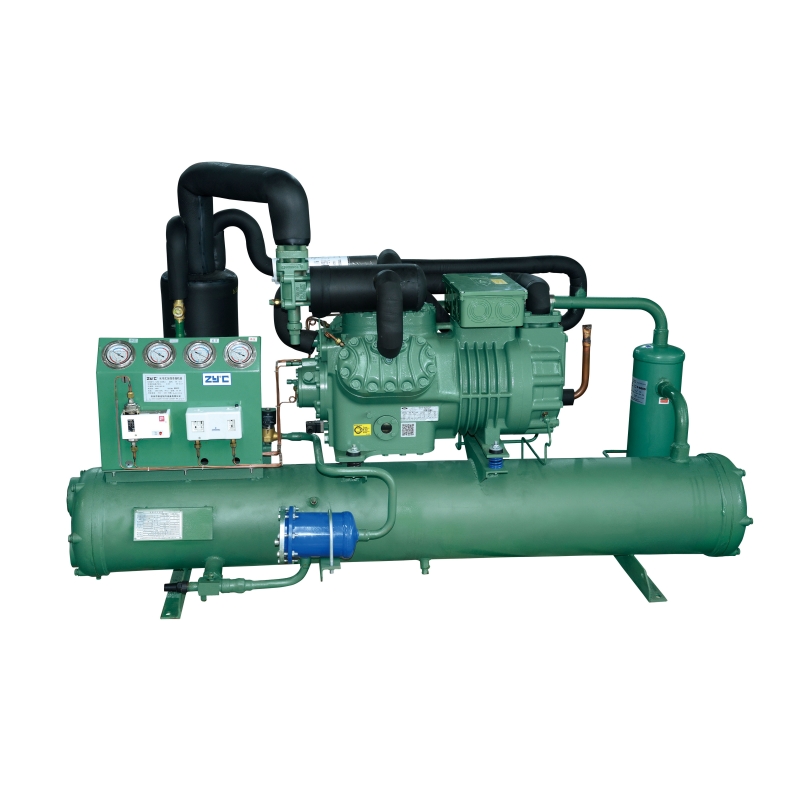
Multiple compressor technologies exist on the market today. However, the Semi-Hermetic Reciprocating Compressor Condensing Unit remains the undisputed industry standard for medium-to-large cold storage. You get a precise balance of field serviceability, robust load management, and exceptional long-term durability. We will explore how to evaluate these systems properly. You will learn implementation best practices and lifecycle strategies maximizing your cold chain reliability.
Facility managers constantly face tough choices regarding infrastructure. You must select equipment based on absolute reliability. Critical environments simply cannot tolerate extended outages. We see many facilities default toward standard commercial options. Enterprise operations require industrial-grade resilience instead. The semi-hermetic reciprocating architecture specifically answers this need. It provides a distinct mechanical advantage.
Hermetic units feature a welded steel casing. When internal parts fail, you must discard the entire compressor. This causes massive delays. A semi-hermetic design changes this dynamic completely. Manufacturers bolt the cast-iron housing shut. On-site technicians can unbolt the casing easily. They rebuild internal components right inside the machine room. You replace valve plates, pistons, and stators individually. This repairability minimizes catastrophic downtime. You save significant money avoiding full hardware replacements.
We must compare reciprocating mechanisms against scroll or screw designs. Scroll compressors work well handling stable, lighter loads. Cold rooms experience fluctuating thermal loads constantly. Doors open and close frequently. Warm product enters the space daily. Reciprocating piston mechanics handle these high compression ratios exceptionally well. They manage low-temperature freezing applications more robustly. Piston designs offer unmatched durability under stress.
These mechanical realities directly impact your business outcomes. You gain predictable maintenance budgets. You stop throwing away expensive equipment over minor internal failures. You maximize operational uptime through quick, targeted repairs.
Selecting the right equipment requires deep technical evaluation. You cannot just look at basic horsepower.
You must match the unit's capacity in BTUs or kilowatts to peak demand. Many buyers mistakenly size equipment for average loads. A summer heatwave easily overwhelms an underpowered system. You risk losing entire inventory batches. Always verify performance drops at high ambient temperatures. A condensing unit rated for 35°C (95°F) might struggle when roof temperatures hit 45°C (113°F).
Common Mistake: Relying solely on standard AHRI rating points. You should demand a performance curve showing capacity at your specific maximum summer ambient temperature.
Energy consumption drives facility operating costs heavily. Assessing the Coefficient of Performance (COP) at part-load conditions is crucial. Cold rooms rarely run at full capacity all day. We look for high efficiency during these off-peak hours. Capacity modulation becomes essential here. Systems might use cylinder unloading or Variable Frequency Drives (VFD). These technologies adjust compressor speed or displacement dynamically. They balance temperature precision while delivering massive energy savings.
Environmental regulations change rapidly across the globe. Regulatory frameworks like the AIM Act and EU F-Gas Regulation force the phase-down of high-GWP refrigerants. You must evaluate units for transitional and future-proof compatibility. Look for models certified for R-448A, R-449A, or natural refrigerants. Buying incompatible hardware creates stranded assets. You mitigate regulatory risks by planning for compliance today.
Refrigeration engineering requires a delicate balance. You want perfectly preserved products alongside low utility bills.
The freshness-efficiency tradeoff demands accurate sizing. If you oversize the equipment, it will short-cycle. The compressor turns on and off rapidly. This ruins humidity control inside the cold room. Produce wilts quickly, and meat loses valuable water weight. Conversely, an undersized unit runs continuously. It never satisfies the thermostat. This spikes energy bills dramatically. It also accelerates mechanical wear across internal moving parts.
Let us break down lifecycle expenditures. We look at upfront Capital Expenditure (CapEx) versus 10-year Operational Expenditure (OpEx). Hermetic units often cost less initially. Their throw-away nature inflates long-term costs. The repairability of a Semi-Hermetic Reciprocating Compressor Condensing Unit alters traditional depreciation models. You invest more CapEx on day one. You save vastly more OpEx over a decade.
| Cost Factor | Standard Hermetic Systems | Semi-Hermetic Reciprocating Systems |
|---|---|---|
| Initial CapEx | Generally Lower | Higher (Premium casting & valves) |
| Maintenance Profile | Run to failure; full replacement | Proactive rebuilds; part replacement |
| 10-Year OpEx | High (Multiple unit replacements) | Low (Cheaper spare parts) |
Buyers should demand transparent data from manufacturers. Always request detailed spec sheets. These documents must detail power consumption across various evaporating temperatures.
Purchasing the right equipment solves only half the puzzle. You must install it correctly.
Spatial and ventilation constraints ruin many good designs. Reciprocating units require adequate airflow. The condenser coil must reject massive amounts of heat. Poor placement against walls leads to high head pressures. High head pressure causes catastrophic compressor failure. You must ensure clear clearance zones around the entire footprint.
We must address vibration and acoustic mitigation carefully. Reciprocating mechanics inherently generate vibration. Pistons move rapidly inside the cylinders. You must install proper vibration isolators under the unit frame. Discharge line mufflers help dampen gas pulsations. Acoustic enclosures become mandatory in noise-sensitive commercial zones. They shield neighboring buildings from mechanical noise.
Modern facilities require smart integration. You must connect your condensing unit into Building Management Systems (BMS). Consider these control integration requirements:
How do you choose the right manufacturer? Follow a structured logic framework.
First, assess the spec sheet deeply. Look beyond the headline cooling capacity. You should check the compressor motor limits thoroughly. Examine the condenser surface area closely. Larger coils reject heat more efficiently. Review the built-in mechanical protections. You want factory-installed oil pressure switches. Crankcase heaters remain non-negotiable for outdoor installations.
Next, conduct rigorous vendor and supply chain vetting. A durable machine remains useless without spare parts.
Your immediate next-step action involves specialized engineering. Stop relying on exact 1:1 replacements of legacy equipment. Facility loads change over time. Insulation degrades. Product volumes increase. We strongly recommend initiating a professional thermal load calculation according to recognized ASHRAE guidelines. Consult a specialized refrigeration engineer. They will map out your exact system requirements accurately.
Investing in a heavy-duty condensing unit represents a strategic business decision. It is not just a simple hardware purchase. You are buying supply chain reliability. Careful evaluation of capacity, compliance, and maintainability yields massive dividends. This rigorous approach protects your perishable inventory. It simultaneously safeguards your profit margins over the next decade. We encourage you to review your current facility load data today. Reach out to a certified refrigeration specialist. They can map out your specific sizing and configuration needs immediately.
A: A well-maintained unit typically lasts 10 to 15+ years. Rigorous preventative maintenance extends this lifespan significantly. On-site technicians can rebuild internal components like valves and pistons. This repairability allows the unit to far outlast standard welded hermetic systems.
A: Reciprocating units manage high compression ratios exceptionally well. Low-temperature freezing applications demand this robust mechanical strength. They are fully rebuildable on-site. Scroll units provide excellent efficiency for medium temperatures, but they are generally welded shut and must be fully replaced upon failure.
A: Yes, in many cases. Retrofitting usually requires specific oil changes and seal replacements. You must always verify compatibility directly with the manufacturer. The engineering team must confirm motor cooling limits and swept volume suitability for the new gas.
A: The most obvious sign involves continuous running without ever reaching the desired temperature setpoint. You might also notice iced-up evaporator coils constantly. Over time, the compressor experiences rapid mechanical wear due to severe overheating and poor oil return.